Five Pieces Worth Your Time This Week
This week: Sam Knight's portrait of FIFA's Gianni Infantino remaking global football in his image (TNY), Zadie Smith's NYRB lecture on why art still matters even though it can't save us, Kevin Maurer's profile of Joe Picard — a 100-year-old D-Day veteran — in The Atlantic, Abraham Jiménez Enoa's first-person account of founding Cuba's first independent magazine and the surveillance that followed (Guardian Long Read), and a trip into northern Spain's sealed Palaeolithic caves with one of the few experts still allowed inside (Guardian Long Read).

Five pieces this week worth more than a scroll through the feed: a portrait of the man who has made the World Cup into a personal empire, a lecture by Zadie Smith on why art can't save us but still matters, a conversation with the last men who actually fought on D-Day, a Cuban journalist's account of founding an independent magazine and then being surveilled into exile, and a trip into the sealed caves of northern Spain where some of the oldest paintings in human history are barely holding on.
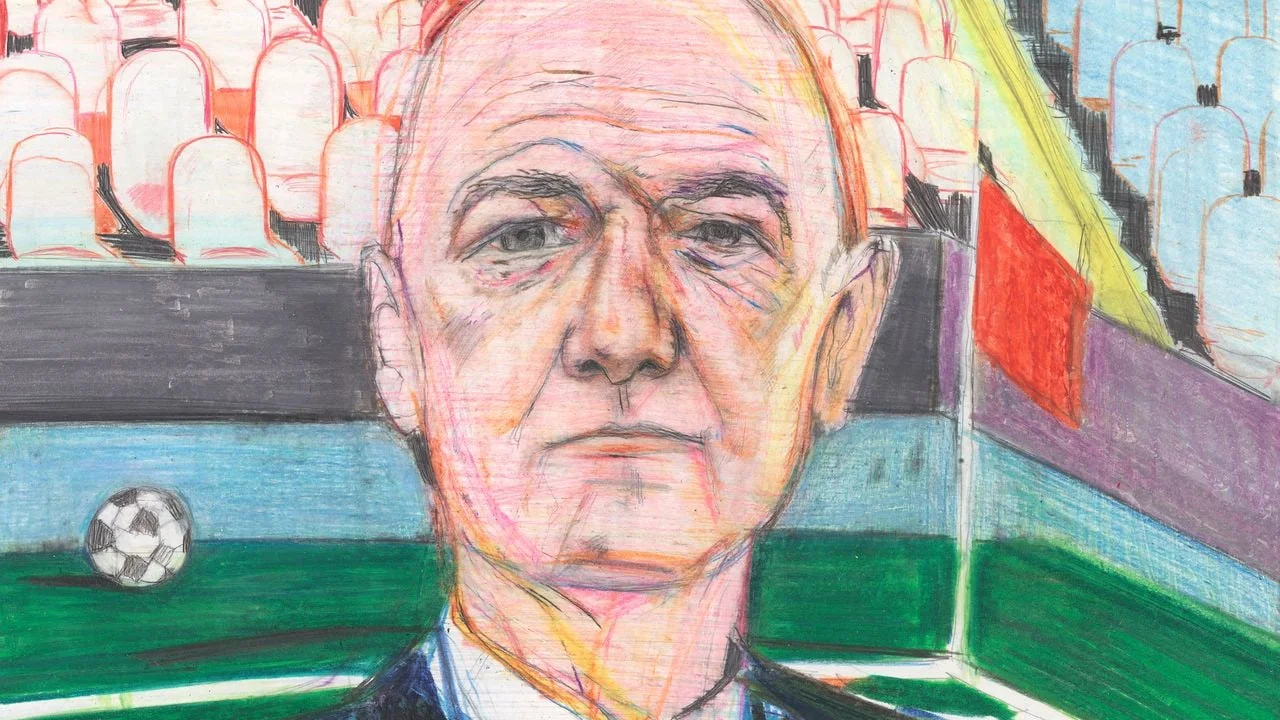
1. The man who remade football in his own image
"The World Cup According to Gianni Infantino"
Sam Knight · The New Yorker · June 8, 2026
~40 min read
Sam Knight's profile of FIFA president Gianni Infantino is as much about power and self-creation as it is about football. Infantino grew up working-class Italian in Switzerland, where Italians were routinely discriminated against, and the 1982 World Cup — when Italy won — gave him his first sense of riscatto, redemption. That word is the emotional engine of the whole story: everything he has done since, Knight argues, can be read as an attempt to scale that feeling into something global and permanent.1
Knight is unsparing about what Infantino has actually built. Since taking over FIFA in 2016, after the US Justice Department arrested dozens of officials for corruption, Infantino has more than doubled FIFA's revenues (now on track for $14 billion over the current four-year cycle), expanded the number of tournaments from two to twenty, and transformed the presidency from backroom dealmaking into something closer to a heads-of-state role. Trump calls him "the king of soccer." He describes FIFA as "the official happiness provider to humanity." His Instagram, with 4.2 million followers and tightly controlled comments, is the organization's main communications channel.
The piece earns its length through on-the-ground reporting — Knight speaks to former FIFA officials, longtime Swiss journalists who've covered Infantino for decades, UEFA insiders who watched him out-maneuver Michel Platini, and the soccer chroniclers who can trace his particular form of institutional ambition to a specific set of injuries and desires. The argument that emerges isn't that Infantino is simply corrupt (the corruption-scandal era he replaced was far more blatant); it's that he has replaced the old corruption with a new kind of power — centralized in one person, largely self-referential, and almost impossible to challenge from within. With the 2026 World Cup starting June 11 across the United States, Mexico, and Canada, the profile arrives at exactly the right moment to understand what we're actually watching.
Why read it now: The World Cup starts in three days. This is the best possible briefing on who really controls it and what he wants from it.
2. Art can't save us, but Zadie Smith argues that's beside the point
"Art for Our Sakes"
Zadie Smith · The New York Review of Books · June 11, 2026 (Vol. 73, No. 10)
~22 min read
This essay began as a lecture Smith delivered at the American Academy of Arts and Letters in May, and it reads like the rare public address that actually says something rather than performing thoughtfulness. The occasion was obvious: with political violence, democratic backsliding, and AI threatening to automate creative work, why talk about arts and letters at all? What's the point?2
Smith's answer is structured around a re-reading of E.M. Forster's 1949 lecture "Art for Art's Sake," delivered in the wreckage of the Second World War. Forster's argument, which sounds hopelessly unfashionable, turns out to hold more than Smith expected: the best artworks have "internal order" that outlasts the historical messes around them. Antigone survives the mess Athens made. Macbeth survives James I. The Known World survives the Iraq War.
But Smith is after something more specific than aesthetics. Her real argument is that art is neither powerful nor progressive in the way we usually want it to be — it can't stop executions, pass laws, or keep up with Moore's Law — and that this limitation is, oddly, the source of its value. Art doesn't get better over time. The gap between Macbeth and The Known World is nothing like the gap between washing clothes in a stream and using a machine. Both require the reader to imagine, think, and engage with a stranger's inner world. That doesn't change. And in a culture that treats "convenience" as the highest aspiration, the insistence on irreducible human effort and relation is itself a form of resistance.
The section on AI cuts cleanest. A machine trained on Morrison and Jones could produce a technically excellent novel about slavery — and might fool most readers. But Smith says she reads to be in relation with another human. A machine that makes love to her might be excellent at making love to her, but "I want to be wanted by a human." That distinction, stubborn and almost anti-intellectual, is what the essay is finally defending.
Why read it now: If you've been asking yourself what reading or writing is even for in 2026, Smith gives a specific and somewhat uncomfortable answer — not "it changes things," but "it keeps something human available."
3. The last men who were actually there
"The Last of the D-Day Veterans"
Kevin Maurer · The Atlantic · June 6, 2026
~15 min read
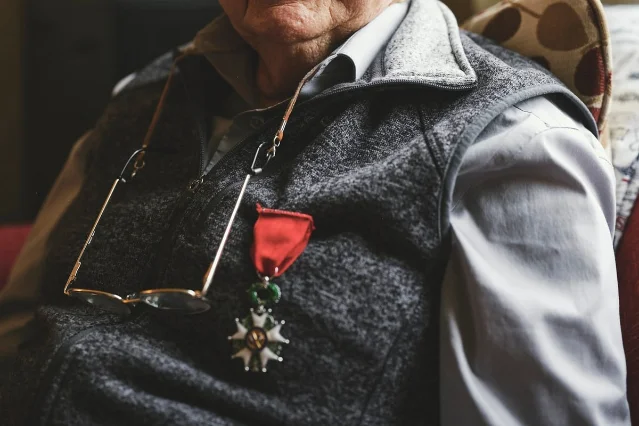
Joe Picard is 100 years old. He graduated from high school on his 18th birthday, registered for the draft the same day, was sent to Fort Bragg, crossed the Atlantic on a liner smelling of unwashed bodies, and ended up on Utah Beach six weeks after D-Day, perched on a mound of 300-pound explosive shells as his ship pushed toward Normandy. Less than 0.5 percent of the 16 million Americans who served in World War II are still alive.3
Maurer's profile isn't a greatest-generation tribute piece. It's quiet and specific, organized around the small sensory details that Picard still remembers with complete clarity — the right amount of straw to stuff into a mattress so the metal slats don't dig into your back; the violin-led orchestra at the fish-and-chip restaurant in Bournemouth; the particular sound of an artillery shell that explodes in mid-air rather than on impact, which is how his best friend Raymond Bolduc was killed in November 1944.
The piece is also about memory and record-keeping. Picard was his battery's de facto historian, typing daily Morning Reports on a portable typewriter — meticulous ledgers of shells fired, promotions, and the names of the dead, which he had to protect from capture. When the government sent Bolduc's widow a telegram with the wrong date of death, she reached out to Picard for clarification. He promised to find her after the war. He couldn't — she'd moved. In 2014, seventy years later, he finally met Bolduc's nephew on an Honor Flight to Washington and was able to close the account. The piece ends there, at that reunion, which is a sharper ending than any retrospective argument about what the war meant.
Why read it now: This is D-Day weekend. Within a few years there will be no one left who can tell you what the straw felt like or which direction the shells came from. This particular form of history ends with the people who carry it.
4. How Cuba tried to silence its first independent journalist
"I Launched Cuba's First Independent Magazine. And That's When My Troubles Began"
Abraham Jiménez Enoa · The Guardian Long Read · June 4, 2026
~22 min read
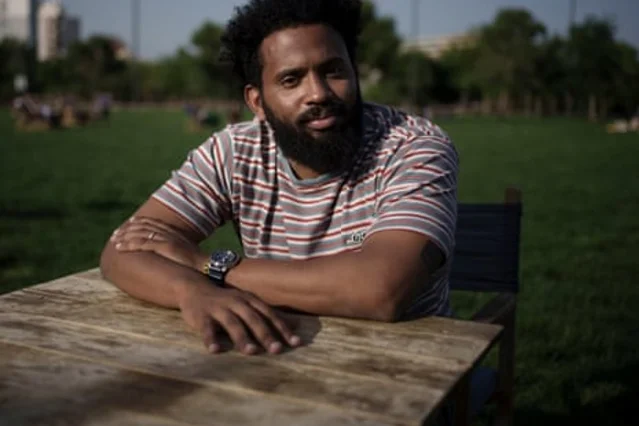
In 2016, Jiménez Enoa and a small group of Cuban journalists launched El Estornudo (The Sneeze) — Cuba's first independent longform magazine, operating from public wifi plazas because they had no office, no personal internet, and no legal right under the Cuban constitution to publish outside state media. They named it after a street vendor's call, because they wanted to be the country's unavoidable physical reaction to what the government preferred to keep quiet.4
The essay (excerpted and translated from a Spanish memoir, Aterrizar en el mundo) is structured as a careful escalation. At first the harassment is bureaucratic — their website gets blocked on the island, readers can only access it via VPN. Then, in 2017, Jiménez Enoa writes a feature about Cuban baseball players who defected to play in the World Series, covering a game watched by Cuban fans on illegal satellite TV. He gets a summons from state security, is detained for 11 hours, threatened with prosecution, and ordered to write down his interrogators' ultimatums in his own handwriting.
By the time he becomes a Washington Post columnist in 2020, the regime is running strip searches, handcuffing him and taking him to Villa Marista — Cuba's secret-police headquarters, modeled on the Stasi and KGB — and trying to air recordings of his interrogations on national television to brand him as a CIA asset. He eventually leaves the country and now lives in exile in Barcelona.
What makes this more than a dissident memoir is the precision of the institutional portrait. Jiménez Enoa is attentive to how the apparatus actually works: the brother-in-law who works at the Ministry of Interior trying to intervene, the plainclothes agents who block you from leaving your building without an arrest warrant, the surveillance that follows you onto shared transit until you buy a bicycle, the moment you realize you can never use the same public phone twice. The Kafkaesque detail isn't ornamental — it's evidence.
Why read it now: Press freedom is abstract until you read exactly how a state removes it from a specific person's life, step by step.
5. The oldest paintings humans ever made, and what we're still trying to understand
"They Take You Out of Life, Out of Time: A Journey Into Spain's Astonishing Cave Paintings"
The Guardian Long Read · June 2, 2026
~25 min read
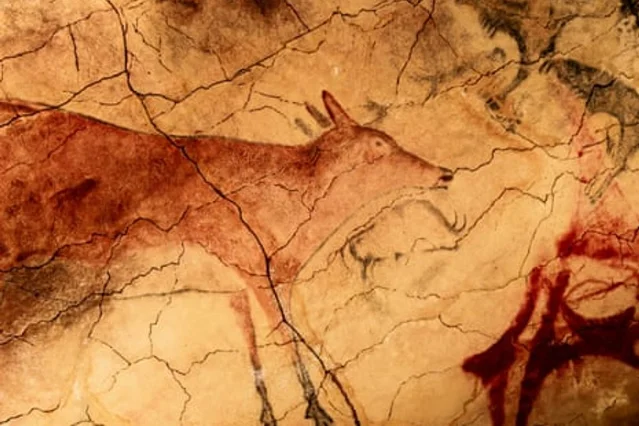
For tens of thousands of years, the Palaeolithic cave paintings of northern Spain were sealed underground. Altamira was discovered in 1868 when a hunting dog fell into a cave. The paintings inside — bison, mammoths, wild cattle, rendered with chiaroscuro shading and three-dimensional depth — were so sophisticated that contemporary French experts declared them fakes. The idea that "primitive" cave people could produce that quality of image didn't fit the period's assumptions about human development. It took the discovery of similar paintings in France to force a retraction.5
This piece follows Diego Garate Maidagan, a professor of prehistoric art at the University of Cantabria and one of the few people still permitted to enter Altamira itself, into a series of caves that are not open to the public. The writing earns its claim on your attention by going somewhere most readers will never be allowed to go and describing exactly what it's like to get there — crawling through low limestone passages for forty minutes with a head torch, losing track of time in total darkness, having an expert adjust your angle of light to reveal a wild bison that was invisible a second before.
Garate's research method is itself the story. He has spent years training volunteers from caving associations to adjust their headlamp angles just so, because he suspects that most of the cave art ever made has long since faded, leaving only faint traces — what he calls "ghost animals" — that trained eyes can still detect. His experimental cave in Lekeitio has become a laboratory for reverse-engineering Palaeolithic technique: what wood burns how bright for how long, how you blow ochre through a bird bone onto your palm to leave a negative handprint, how you use a bear's claw marks on the wall as a starting point for a deer's antler.
What the paintings mean — why a fire under a shelf of carved horses makes them appear to gallop for the observer below, who chose this location and why — remains genuinely unknown and is likely to stay that way. That unresolved quality isn't the piece's weakness. It's what the piece is about.
Why read it now: The cave paintings are among the oldest surviving evidence of human symbolic thought. Understanding how they were made — and accepting how much about them we'll never know — changes the frame on nearly everything else in this list.
Read-time estimates based on 250 wpm. This week's five draw from The New Yorker, The New York Review of Books, The Atlantic, and The Guardian Long Read — no overlap with previous issues.
Add more perspectives or context around this Post.